
Solar Panel Installation Near You – Best Installers & Prices
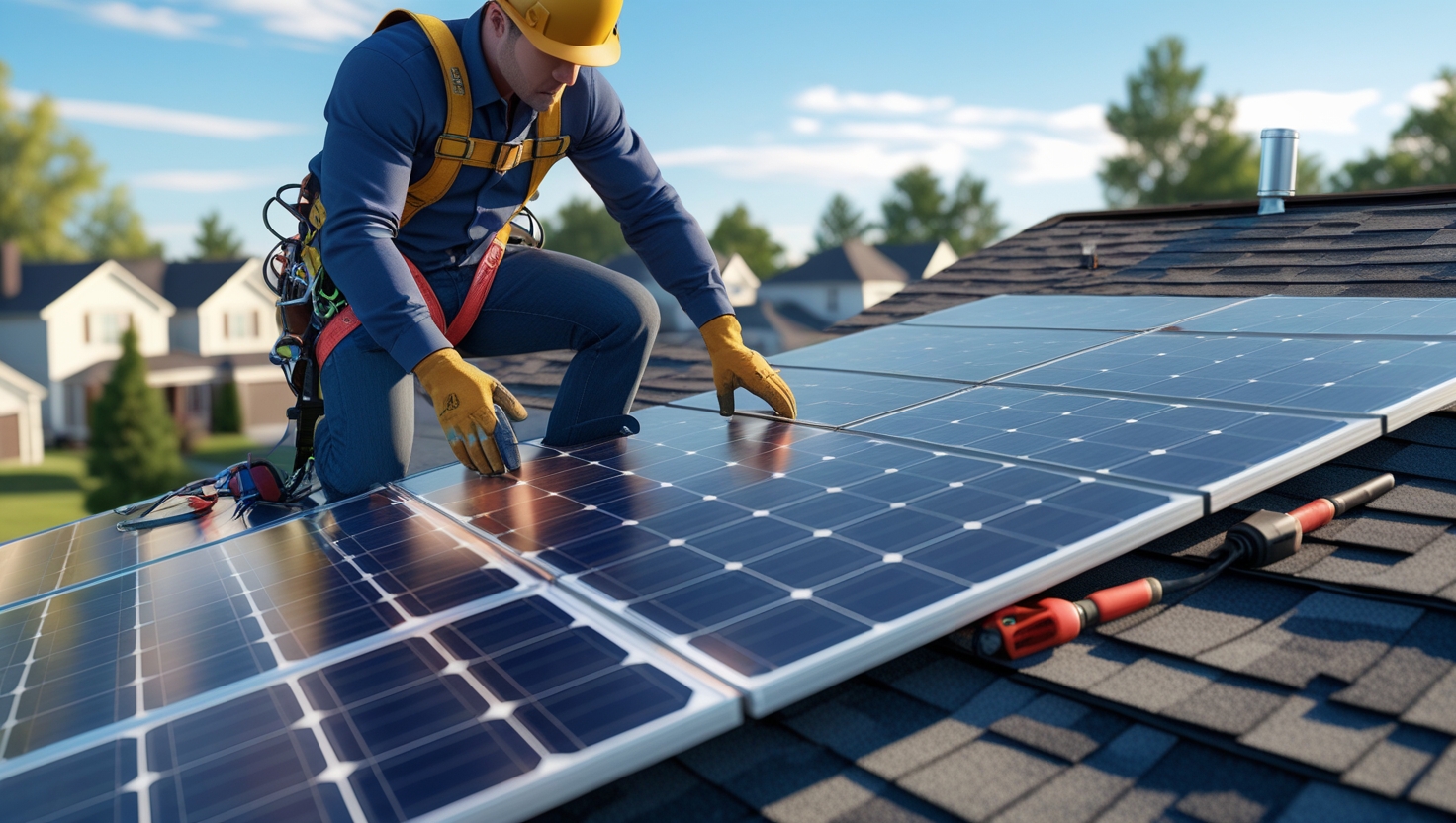
Solar energy isn’t just a trend; it’s a game-changer for companies and homes that want to save money, lower their carbon footprint, and become energy-independent. Solar Panel Installation is a safe, environmentally friendly option that pays for itself in the long run. Putting in solar panels is good, whether you’re fed up with rising energy bills or want to help the environment.
Solar panel installation is now easier than ever, thanks to technological progress and falling costs. Today, solar systems are more efficient, last longer, and are easier to manage than most people think. You don’t have to be a tech expert or an environmental activist to go solar. Solar energy is also a good long-term investment because there are many incentives, rebates, and financing choices.
Why Solar Energy?
Solar power is about investing in a better future. It’s cleaner to make energy this way, and you use fossil fuels less. That’s good for the earth and your wallet.
- Eco-friendly energy
- Reduces greenhouse gas emissions
- No air or water pollution
How Solar Panels Work
A solar panel system main job is to collect sunlight and turn it into power used in your home or business.
The Process:
- Photovoltaic cells absorb sunlight.
- Inverters convert DC to AC electricity.
- Electricity powers your appliances or is stored in batteries.
- Excess power may be returned to the grid for credit (net metering).
Solar Panel Installation Process
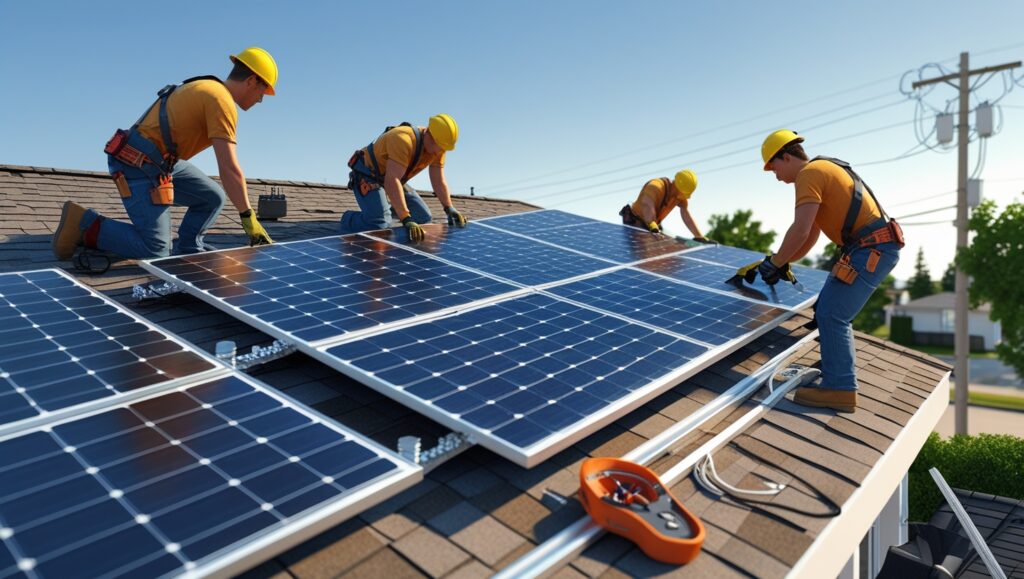
If you want to put panels on your roof or plan a system mounted on the ground, knowing the whole process will help you get ready and make smart choices. From beginning to end, this is how the trip looks:
Initial Site Assessment
A professional will visit your home or business to look at its solar possibilities before anything goes up.
What they’ll check:
- Roof direction and tilt
- Shading from trees or other structures
- Roof age, condition, and load-bearing capability
- Available space for panels
- Local climate and average sunlight
📌 Tip: South-facing roofs with little shade are ideal for maximum efficiency.
System Design and Proposal
Following the site assessment, the installer designs a solar system to meet your home’s energy needs.
This includes:
- Number and type of panels
- Inverter type (string, micro, or hybrid)
- Battery storage options (if any)
- Estimated system output (kWh/year)
- Projected savings and payback period
This is also when you’ll get a price and a contract. Review all the terms, warranties, and prices carefully before you proceed.
Permitting and Paperwork
Solar projects need permission and approval from the utility company. Don’t worry; this is usually taken care of by the provider.
They’ll manage:
- Local building permits
- Electrical permits
- Zoning approvals
- Net metering application (for grid-tied systems)
- Federal and state incentive applications
📋 Timeframe: Based on where you live, getting a permit can take anywhere from two to six weeks.
Solar Panel Installation Day
It’s time to set up your system once everything is okay.
What happens:
- Mounting equipment is securely attached to your roof or ground frame
- Panels are carefully installed on the mounts
- Electrical wiring connects the panels to the inverter and the electrical panel
- Battery systems are installed if applicable
🛠️ Average installation time: 1 to 3 days.
System Inspection and Interconnection
Once the work is done, it is inspected to ensure it meets all safety and code requirements.
Steps include:
- Local building inspector visits your property
- The utility company performs a final inspection
- Once approved, you’ll receive Permission to Operate (PTO)
⚡ Once you press the PTO button, your system is fully linked to the grid.
System Activation
Your installer will walk you through:
- Turning on your solar system
- Monitoring energy production via a mobile app or dashboard
- Maintenance tips and warranty coverage
🎉 Congratulations! You can now get clean, green energy from the sun!
Summary Checklist ✅
| Step | Task | Who’s Responsible |
|---|---|---|
| 1. Site Assessment | Property evaluation | Installer |
| 2. System Design | Custom layout & savings estimate | Installer |
| 3. Permitting | Local and utility approvals | Installer |
| 4. Installation | Mounting, wiring, inverter setup | Installer |
| 5. Inspection & PTO | Compliance check & grid connection | Inspector & Utility |
| 6. Activation | System start-up & walkthrough | Installer & You |
Installing Solar Panels On Roof
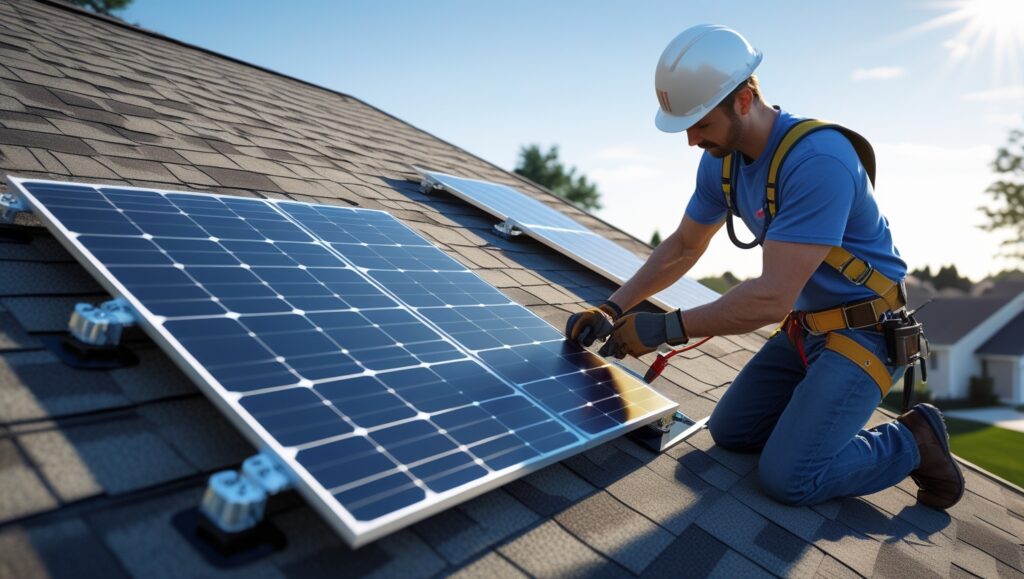
Installing solar panels on your roof is one of the most intelligent methods to use renewable energy sources and lower electricity costs. An expert evaluation of your roof to ascertain its appropriateness is the first step in the process. How much sunlight your system can catch depends on several important factors, including the direction your roof faces, its angle or pitch, and the shade it receives during the day. A south-facing roof with few impediments provides the optimal amount of sunshine exposure, which maximizes energy generation.
When your roof is judged a suitable candidate, the solar installation crew begins by installing racking equipment—the frameworks that firmly hold the panels in place. This step is essential to ensure that the panels endure weather conditions and stay securely bonded. This secures the racking installation, and the solar panels are fastened and wired to one another.
These cables connect the panels to an inverter, transforming the solar energy into electrical power that can be used in your house. After your utility company approves it, the system is finally connected to your main electrical panel and starts producing clean solar electricity straight from your rooftop.
Solar Panel Wiring Guide
| Component | Description | Purpose |
|---|---|---|
| Series Wiring | Connects positive terminal of one panel to the negative of the next | Increases voltage while keeping current the same |
| Parallel Wiring | Connects all positive terminals together and all negative terminals together | Increases current while keeping voltage the same |
| Series-Parallel Wiring | Combination of both series and parallel configurations | Balances both current and voltage |
| Combiner Box | Merges multiple strings of panels into one output | Simplifies wiring and adds overcurrent protection |
| DC Disconnect | Safety switch between solar array and inverter | Allows manual shutdown of DC current for maintenance or emergencies |
| Inverter | Converts DC electricity from panels to AC electricity for household use | Makes solar energy usable in standard electrical systems |
| AC Disconnect | Safety switch between inverter and main service panel | Isolates inverter from home and utility grid during maintenance |
| Main Service Panel | The home’s breaker panel | Distributes electricity to home circuits or exports excess to the grid |
| Grounding System | Wire system connecting components to earth ground | Protects the system and occupants from electrical faults or lightning |
| Wiring & Cables | Insulated copper or aluminum wires rated for outdoor use | Carries electrical current safely between components |
Solar Panel Mounting Brackets
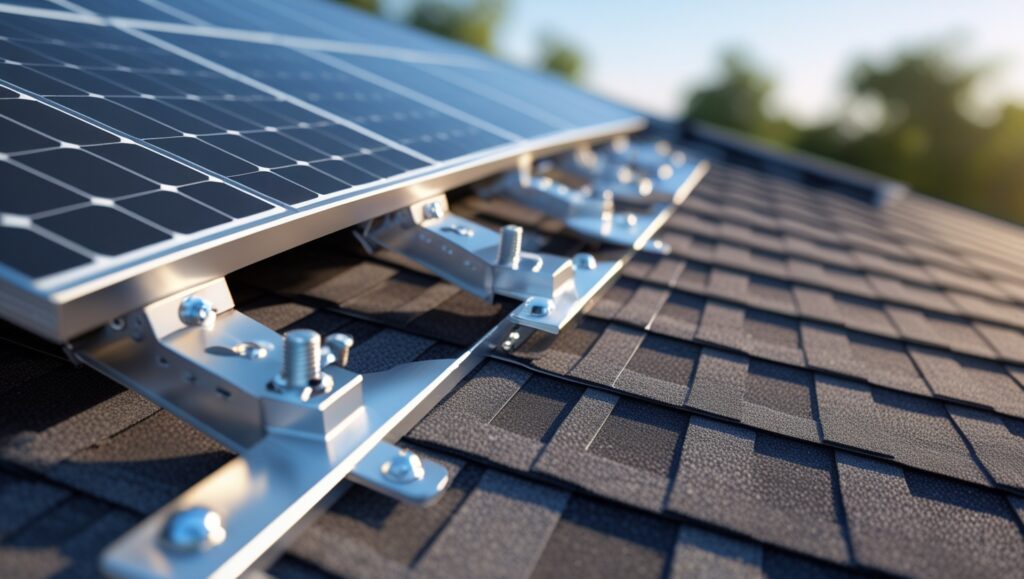
Solar panel brackets are important parts of any solar power system, but they are especially important for roof installation. With these brackets, you can safely connect solar panels to your roof or other surfaces like the ground, carports, or poles. These brackets are also called mounting systems or solar racking systems.
With the right brackets, the panels will be angled adequately toward the sun, stay stable in bad weather or high winds, and last long without hurting your roof or building. Solar panel brackets come in different styles based on the area in which they will be installed. Most brackets are installed on the roof and come in styles for flat, sloped, shingle, tile, and metal roofs.
They have rails, L-feet, clamps, and sealing to stop water leaks. Ground-mounted brackets have metal frames that are anchored into the ground. These are good for homes that don’t have much roof room or get little sun. Adjustable tilt brackets let you change the angle based on the season to get the most out of the sun all year.
Good solar panel brackets are usually made of metal or stainless steel, which doesn’t rust and will last a long time. It is important to pick the right frames for your system to work well, stay safe, and last a long time.
Solar Panel Installers
Installers of solar panels are very important for ensuring that your switch to solar energy goes smoothly, safely, and effectively. These trained professionals do everything from planning the system and getting the necessary permits to installing it, setting it up, and turning it on for the first time.
A skilled installer will ensure that your solar panels are placed to get the most sunlight and meet all safety and building rules in the area. Picking a licensed and trustworthy solar panel provider in the U.S. can greatly affect how well the system works, how reliable it is, and how much money you get back.
Several well-known and reliable solar installation companies in the United States offer full-service solutions, such as evaluating the site, designing a custom system, and providing maintenance support. Here are some of the best companies that can install solar panels for you:
Solar Panel Installation Company
| Company Name | Headquarters | Coverage | Highlights |
|---|---|---|---|
| Sunrun | San Francisco, CA | Nationwide | Offers leasing, PPAs, and ownership options; strong warranty and monitoring |
| Tesla Energy | Palo Alto, CA | Nationwide | Integrates with Tesla Powerwall; sleek design and minimalistic hardware |
| SunPower | San Jose, CA | Nationwide (via dealers) | High-efficiency panels with complete energy solutions; 25-year warranty |
| Momentum Solar | South Plainfield, NJ | Select states (East & South) | Personalized customer service; handles permits and paperwork |
| Blue Raven Solar | Orem, UT | 20+ states | Known for fast installation and $0 down financing options |
| Palmetto Solar | Charleston, SC | Many states | All-in-one platform with proactive system monitoring and support |
| ADT Solar | Baton Rouge, LA | 20+ states | Backed by ADT’s trusted brand; excellent warranties and support |
| Vivint Solar (Sunrun) | Lehi, UT | Merged with Sunrun | Known for smart home integration and flexible financing |
| Trinity Solar | Wall Township, NJ | Northeast, Mid-Atlantic | Family-owned company with over two decades of experience |
| Elevation Solar | Chandler, AZ | Southwestern U.S. | Integrates energy efficiency upgrades with solar solutions |
Solar Panel Installation Cost
The costs of installing solar panels in the U.S. vary depending on several factors, such as the size of the system, its location, the type of panels used, the state of the roof, and any available incentives. Most people in the U.S. will pay between $15,000 and $25,000 for a full solar system, and that’s before any tax credits or rebates are considered. However, the net cost can decrease significantly because of federal and state tax breaks.
Average Cost to Install Solar panels
| System Size (kW) | Average Cost (Before Incentives) | Estimated After Federal Tax Credit (30%) |
|---|---|---|
| 4 kW | $10,000 – $12,000 | $7,000 – $8,400 |
| 6 kW | $15,000 – $18,000 | $10,500 – $12,600 |
| 8 kW | $20,000 – $24,000 | $14,000 – $16,800 |
| 10 kW | $25,000 – $30,000 | $17,500 – $21,000 |
Is Solar Worth the Investment?
Even though they cost more upfront, solar panels pay for themselves in energy savings in 6 to 10 years. Based on local electricity rates and incentives, the average homeowner can save anywhere from $15,000 to $40,000 or more over 25 years. Solar also raises the worth of your home when you want to sell it and lowers your carbon footprint.
FAQs about Solar Panel Installation
How long does it take to install solar panels?
The installation typically takes 1 to 3 days, but the process, including getting permits and inspections, can take up to eight weeks.
How to connect PV panels?
MC4 connectors, junction boxes, and an inverter finish off the circuit. PV panels can be linked in series for higher power or in parallel for higher current.
Can you DIY install solar panels?
Yes, experienced people can do it, but it’s not advisable because of the safety risks, the need for a permit, and the chance that the guarantee will be voided.
How much roof space for solar panels?
For every 1 kW of solar panels, you need about 100 square feet of roof space. For a typical 6 kW setup, you need about 600 square feet.
How heavy are solar panels?
Each standard home solar panel weighs between 40 and 50 pounds, which is about 2.5 to 4 pounds per square foot when installed.
How many solar panels to power a house?
Depending on the wattage of the panels, the amount of energy the home uses, and the amount of sun it gets, most houses need between 15 and 25 panels to fully offset their electricity use.