
How Do Solar Panels Work? How Sunlight Powers Your Home
When you see a house with shiny panels on the roof, have you ever thought, “How do solar panels work?” You’re not by yourself. Sunlight is a popular way to lower our carbon footprint and electricity bills since green energy has become more popular. What does happen inside those smooth walls when the sun shines on them, though?
We will explain in detail how solar panels work, covering everything from the science behind them to how they provide electricity to your home. Suppose you’re a homeowner thinking about solar energy, a student learning about green resources, or someone wanting to know more. In that case, this article has a lot of answers in a way that is natural and easy to understand.
What Are Solar Panels?
Solar Panels 101
Sunlight is turned into power by solar panels, which are also called photovoltaic (PV) panels. They have many solar cells that use semiconducting materials to collect energy from the sun and turn it into electricity that can be used.
- Most common material used: Silicon
- Each solar panel is a collection of solar cells
- Panels are usually installed on rooftops or open land
How Do Solar Panels Work?
Here’s how solar panels work in simple terms:
- 🌞 Sunlight hits the solar panel
- ⚡ Photons (light particles) knock electrons free in the silicon cells
- 🔄 This flow of electrons makes direct current (DC) energy.
- 🔌 DC energy is changed to AC electricity, which your home uses, by an inverter.
- 💡 Electrical power comes into your house or is returned to the grid.
How is Solar Energy Created?
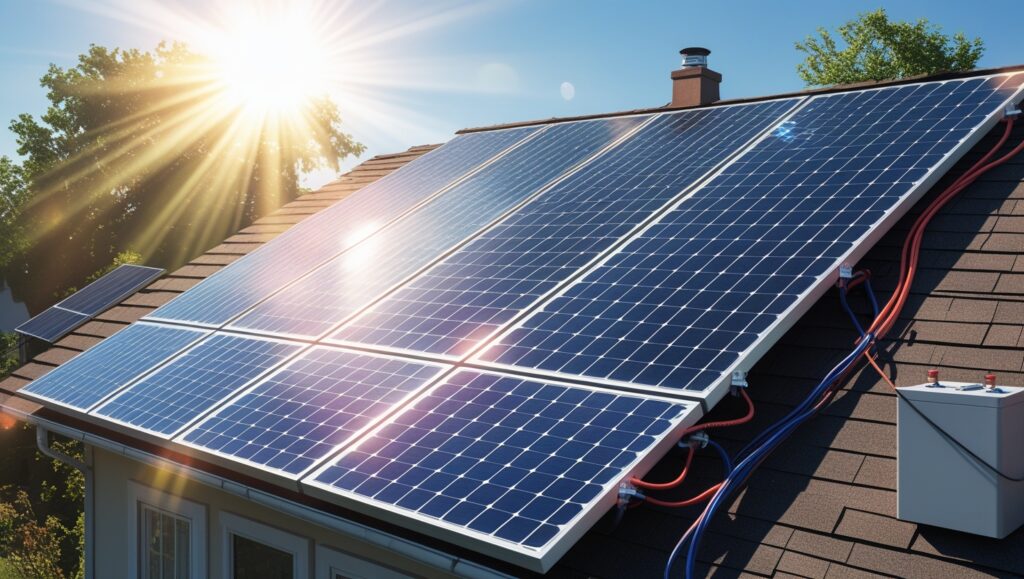
The basic idea behind how solar panels work is called the photovoltaic effect, and it was first found in 1839. This effect is what all current solar power systems are based on. When sunlight hits the semiconducting material in a solar panel, which is usually silicon, it makes the electrons in the material more active. When these charged electrons start moving, they run an electric current.
The current is then collected by wires built into the solar panel, which send it straight into your home electrical system or a battery storage unit for later use. Solar panels are an efficient and environmentally friendly way to get power because they turn sunlight directly into energy that can be used.
What Happens to Excess Energy?
Grid-Tied vs. Off-Grid Systems
Solar panels can either power your home directly, charge a battery, or send power back into the grid, depending on how they are set up.
- Grid-Tied Systems
- Excess power goes to the local utility
- You receive credits via net metering
- Off-Grid Systems
- Store excess energy in batteries
- No dependency on the local power grid
The Role of the Inverter
Solar panels’ power is direct current (DC), but most homes and appliances use alternating current (AC). This is where the inverter in a solar energy system comes in handy. The inverter’s main job is to change the DC electricity that the solar panels make into AC electricity that your home can use. Inverters come in several styles, such as string, microinverters, and power optimizers.
String inverters are the most common type and are used in simpler systems. Microinverters and power optimizers, on the other hand, are more efficient and let you check on the performance of each panel. These more advanced choices are especially helpful in situations where shading or changing the orientation of the panels could affect how much energy is produced.
Environmental Impact of Solar Energy
Not only is going solar cheaper, but it’s also better for the environment.
- Reduces greenhouse gas emissions
- Decreases reliance on fossil fuels
- Helps fight climate change
- Conserves water compared to traditional power generation
How to Install Solar Panels
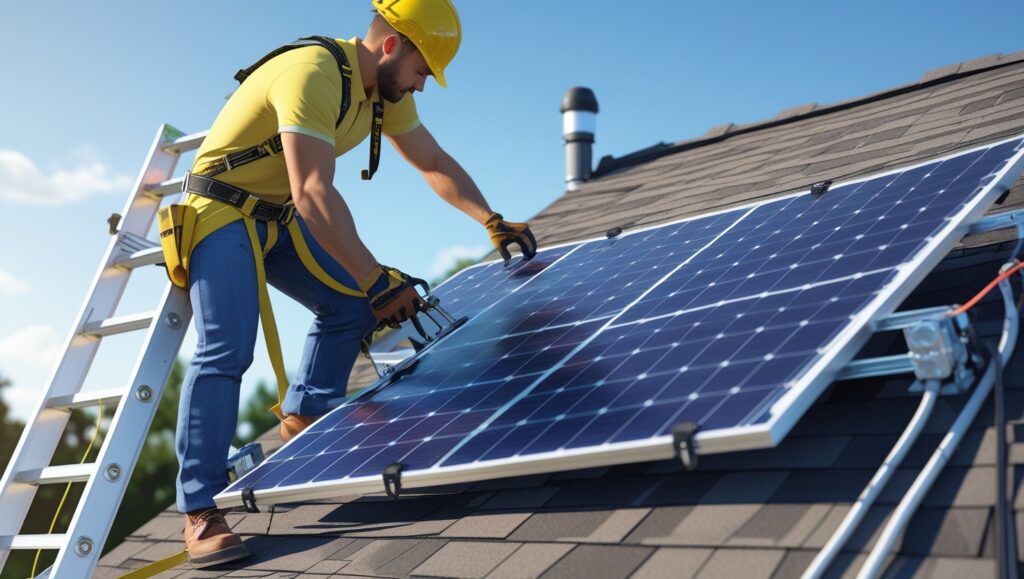
When installing solar panels, you must take several important steps to ensure your system works well and safely. First, check your roof’s state and how much sun it gets to ensure it’s ready for solar installation. Next, you should hire a professional solar expert to look at your home’s solar potential and help you make a system that fits your needs.
Once you’ve decided on a grid-tied, off-grid, or hybrid solar system, you’ll need to get the right permits and see if any tax credits or grants can help you save money. Mounting hardware is first safely attached to your roof. This will keep the solar panels in place during the installation process. After that, the solar panels are carefully installed and wired to connect to the generator.
After that, the converter is put in place to change the direct current (DC) the panels make into the alternating current (AC) that your home’s electrical system needs. Lastly, once all the parts are in place, the city will check your system and energy company. After getting permission, you can turn on your solar energy system and start making clean, green energy. Always work with licensed experts to ensure the installation is safe and effective.
Installation Steps Recap:
- Assess roof condition and sun exposure
- Hire a professional solar installer
- Choose the right solar system (grid-tied, off-grid, hybrid)
- Obtain permits and explore incentives
- Install mounting hardware on the roof
- Secure and wire solar panels
- Install the inverter
- Complete inspections and activate the system
Is Solar Worth It?
The initial costs of installing solar panels may seem pricey, but the long-term savings can be big. One of the best things about solar energy is that it can lower or even eliminate your electricity bills because it is a free power source once it is set up. Many governments also offer tax credits and other benefits that can lower start-up costs, like the Federal Investment Tax Credit.
Solar panels can save you money on energy bills and raise your home’s value, so it’s a good investment if you ever want to sell. Within 5 to 10 years, most homeowners get their money back (ROI), and after that, the power they make is free. With these financial benefits, solar power is something you should look into if you want to save money on energy costs and help the environment in the long run.
Battery Storage Systems
You can store extra power with solar batteries at night or when the power goes out.
- Popular battery: Tesla Powerwall, LG Chem, Enphase
- Provides energy independence
- Useful for areas with unreliable grid power
FAQs about How Do Solar Panels Work
How do solar panels work at night?
At night, solar panels don’t make power. You can get power from the grid or use energy saved in batteries.
Can solar panels work on cloudy days?
They still make electricity, but not as well as they used to. These days, screens are made to work in light that is spread out.
How long do solar panels last?
Most solar panels have guarantees lasting between 25 and 30 years; if you care for them, they can last even longer.
Do I need batteries with my solar panels?
Not all the time. You don’t need batteries if you’re hooked up to the power. They do, however, offer backup power and energy freedom.
Are solar panels worth the investment?
Yes! Over time, they save money, raise the value of your home, and are better for the environment.
How do solar panels work with your electric bill?
The energy that your solar panels make can balance out the electricity you buy from the grid, lowering your electric bill. Some companies offer net metering, which lets you get paid for the extra power you send back to the grid if your system makes more than you use.
How do home solar panels work?
Solar panels on homes collect light from the sun and turn it into direct current (DC) energy. An inverter changes this direct current (DC) electricity into alternating current (AC) electricity to power the things you use around the house.
How do I know if my solar panels are working?
You can use a tracking system that your installer or the maker of your inverter gives you to see how well your solar panels are working. Check for consistent reports of how much energy is being produced, look at the inverter’s screen for any error messages, and monitor your power bill to see if it goes down as expected.